Wednesday, January 14, 2015

Freycinetia arborea

Freycinetia arborea, ʻIeʻie, is a densely branched, brittle, woody climber in the family Pandanaceae, endemic to the Pacific Islands. ʻIeʻie is found in moist forest on the Hawaiian, Marquesas, Austral, Society, and Cook Islands. It grows into the forest canopy, attaching itself to a host tree using aerial roots. It may also grow as a sprawling tangle on the forest floor. 

The shiny green leaves have pointed ends and are spiny on the lower side of the midrib and along the edges.Leaves measure 40–80 centimetres (16–31 in) long and 1–3 centimetres (0.39–1.18 in) wide, and are spirally arranged around the ends of branches. Flowers form on spike-like inflorescences at the end of branches, and are either staminate or pistillate. Staminate spikes are yellowish-white and up to 10 centimetres (3.9 in) in length.

 Pistillate spikes are 3–4 centimetres (1.2–1.6 in) but elongate to 7.5–9.5 centimetres (3.0–3.7 in) once fruit are produced. Three to four spikes are surrounded by orange-salmon bracts. Fruit is 1 centimetre (0.39 in) long and contains many 1.5-millimetre (0.059 in) seeds.  The bracts and fruit of the ʻieʻie were a favorite food of the ʻōʻū (Psittirostra psittacea), an extinct Hawaiian honeycreeper that was formerly a principal seed dispersal vector for plants with small seeded, fleshy fruits in low elevation forests. It is also a favored food of the ʻalalā (Corvus hawaiiensis), which is currently extinct in the wild.

Typha latifolia

Typha latifolia (bulrush, common bulrush, broadleaf cattail, common cattail, great reedmace, cooper's reed, cumbungi) is a perennial herbaceous plant in the genus Typha. It is found as a native plant species in North and South America, Europe, Eurasia, and Africa. In Canada, broadleaf cattail occurs in all provinces and also in the Yukon and Northwest Territories, and in the United States, it is native to all states except Hawaii. It is an introduced and invasive species, and considered a noxious weed, in Australia and Hawaii. It is not native but has been reported in Indonesia, Malaysia, New Zealand, Papua New Guinea, and the Philippines.

T. latifolia has been found in a variety of climates, including tropical, subtropical, southern and northern temperate, humid coastal, and dry continental. It is found at elevations from sea level to 7,500 feet (2,300 m).
T. latifolia is an "obligate wetland" species, meaning that it is always found in or near water. The species generally grows in flooded areas where the water depth does not exceed 2.6 feet (0.8 meters).[9] However, it has also been reported growing in floating mats in slightly deeper water. T. latifolia grows mostly in fresh water but also occurs in slightly brackish marshes. The species can displace other species native to salt marshes upon reduction in salinity. Under such conditions the plant may be considered invasive, since it interferes with preservation of the salt marsh habitat.

T. latifolia shares its range with other related species, and hybridizes with Typha angustifolia, narrow-leaf cattail, to form Typha × glauca (Typha angustifolia × T. latifolia), white cattail.Common cattail is usually found in shallower water than narrow-leaf cattail.
The plant is 1.5 to 3 metres (5 to 10 feet) high and it has 2–4 cm (¾ to 1½ inch) broad leaves, and will generally grow out in to 0.75 to 1 metre (2 to 3 feet) of water depth.

Traditionally, Typha latifolia has been a part of many native North American cultures, as a source of food, medicine, and for other uses. The rhizomes are edible after cooking and removing the skin, while peeled stems and leaf bases can be eaten raw, or cooked. Young flower spikes are edible as well. Some cultures make use of the roots of T. latifolia as a poultice for boils, burns, or wounds.The Hopi Kachinas give the plant to children with toys attached, such as bows and dolls during the Home Dance.

While Typha latifolia grows all over, including in rural areas, it is not advisable to eat specimens deriving from polluted water as it is used as a bioremediator, it absorbs pollutants. Do not eat them if they taste very bitter or spicy.

Wednesday, January 7, 2015

Nepenthes adnata

Nepenthes adnats is a tropical pitcher plant endemic to the Indonesian province of West Sumatra, where it grows at elevations of 600 to 1200 m above sea level. The specific epithet adnata is Latin for "broadly attached" and refers to the base of the lamina.

Nepenthes adnata was first collected by Willem Meijer on August 24, 1957. The holotype, Meijer 6941, was collected on that date near the river Tjampo, east of Payakumbuh, Taram, West Sumatra, at an elevation of 1000 m. It is deposited at the National Herbarium of the Netherlands in Leiden.
The species was first described in 1986 by Mitsuru Hotta and Rusjdi Tamin based on specimens the authors collected near Harau in West Sumatra. However, the description was invalid as it lacked a Latin diagnosis. This was provided eight years later by Jan Schlauer.

Nepenthes adnata is a diminutive species. The stem is cylindrical in cross section and may be climbing or drooping. It rarely exceeds 2 m in length and 3 mm in diameter. Internodes are up to 10 cm long.

Leaves are coriaceous and sessile. The lamina is lanceolate-ellipsoidal and may be up to 10 cm long and 2 cm wide. It has an adnate base and an obtuse to acute apex. Two to three longitudinal veins are present on either side of the midrib. Pinnate veins are not easily distinguished. Tendrils may be up to 5 cm long.

Rosette and lower pitchers are ovoid in the lower third and cylindrical above. They are small, reaching only 10 cm in height and 2.5 cm in width. A pair of fringed wings (≤3 mm wide) runs down the front of terrestrial pitchers. The glandular region covers only the lower third of the inner pitcher surface. The pitcher mouth is round and slightly oblique throughout. The cylindrical peristome is up to 2 mm wide and bears indistinct teeth. The peristome is roughly symmetrical in cross section, with the inner portion accounting for around 54% of its total cross-sectional surface length. The lid or operculum is orbicular and cordate at the base. Multicellular hairs are sometimes present on its upper surface. An unbranched spur (≤2 mm long) is inserted at the base of the lid.

Upper pitchers are ovoid in the lower quarter and cylindrical to infundibular above. In aerial pitchers, the wings are usually reduced to ribs, but sometimes bear fringe elements. In most other respects, they are similar to lower pitchers.

Nepenthes peltata

Nepenthes peltata is a tropical pitcher plant known only from the upper slopes of Mount Hamiguitan on the island of Mindanao in the Philippines. It is characterised by a peltate tendril attachment and conspicuous indumentum. The species typically produces ovoid pitchers with a prominent basal crest and large nectar glands on the lower surface of the lid.
The specific epithet peltata is Latin for "peltate" and refers to the distinctive tendril insertion of this species.

Nepenthes peltata is a scrambling plant typically growing to a height of 1 m, although stems up to 3 m long have been recorded. The species does not appear to produce a climbing stem.

The lamina (leaf blade) is oblong in shape and reaches 50 cm in length by 9 cm in width. The apex of the lamina is rounded, while the base is abruptly contracted into the petiole, which is canaliculate and up to 7 cm long in mature plants. Young plants may have sessile leaves lacking a petiole. The lower surface of the lamina is often dark red in colour, contrasting sharply with the dark green upper surface. The margins of the lamina are sometimes curled upwards. Tendrils have a peltate insertion, with the point of attachment being up to 27 mm from the apex.

Rosette and lower pitchers vary widely in morphology, ranging from ellipsoidal to urceolate or entirely ovate. They are relatively large, growing to 28 cm in height by 16 cm in width. A pair of wings (≤10 mm wide), with fringe elements up to 9 mm long, runs down the ventral surface of the pitcher cup. The peristome is approximately cylindrical and up to 2 cm wide. It bears ribs up to 1.5 mm high and spaced up to 2 mm apart, which may terminate in teeth up to 1 mm long. 

The pitcher lid or operculum is ovate to elliptic in shape and measures up to 8 cm in length by 6 cm in width. A triangular basal crest is sometimes present on the underside of the lid together with scattered giant nectar glands measuring up to 3 mm across. An unbranched spur (≤12 mm long) is inserted near the base of the lid.

Nepenthes peltata has a racemose inflorescence measuring up to 75 cm in length. Its thickness varies from up to 3.5 cm in males to up to 6.5 cm in females. The peduncle itself may be up to 46 cm long and 9 mm wide, while the rachis can reach 20 cm. Partial peduncles are mostly two-flowered and bear a bract (≤7 mm long). Their unbranched basal portion is up to 3 mm long, while the branches reach 14 mm. The ovate tepals measure up to 4 mm in length and have an acute apex. Fruits are approximately 20 mm long, while seeds measure around 4 mm.

Nepenthes ampullaria


Nepenthes ampullaria  is a very distinctive and widespread species of tropical pitcher plant, present in Borneo, the Maluku Islands, New Guinea, Peninsular Malaysia, Singapore, Sumatra, and Thailand.
Nepenthes ampullaria, unlike other members of its genus, has evolved away from carnivory and the plants are partly detritivores, collecting and digesting falling leaf litter in their pitchers.
In the 1996 book Pitcher-Plants of Borneo, N. ampullaria is given the vernacular name flask-shaped pitcher-plant. This name, along with all others, was dropped from the much-expanded second edition, published in 2008.

The stem of N. ampullaria is light brown in colour and may climb to 15 m in height. Leaves are light green, up to 25 cm long, and 6 cm wide. Pitchers are produced at the ends of short tendrils no more than 15 cm long.
The urceolate pitchers are generally quite small, rarely exceeding 10 cm in height and 7 cm in width. The peristome is greatly incurved, with the inner section accounting for around 85% of its total cross-sectional surface length. Upper pitchers are very rarely produced and are considerably smaller than those formed on rosettes or offshoots. Pitchers range in colouration from light green throughout to completely dark red, with many intermediate forms recorded. The pitchers of N. ampullaria from Sumatra and Peninsular Malaysia are almost exclusively green throughout or green with red speckles; the red forms are mostly confined to Borneo. A large-pitchered form has been recorded from New Guinea.

The inflorescence of N. ampullaria is a dense panicle. It is the only Nepenthes species recorded from Sumatra or Peninsular Malaysia that produces paniculate inflorescences.

All parts of the plant are densely covered with short, brown hairs when young. The indumentum of mature plants is more sparse, except on the inflorescences.

Wednesday, December 31, 2014

Aster alpinus

Aster alpinus (Alpine aster) is an ornamental plant native to the mountains of Europe (including the Alps), with a subspecies native to Canada and the United States. It is a perennial forb having purple, pink or blue flowers belonging to the genus Aster.

It grows to be about 6-12 inches (15–30 cm). The bloom color may be pink, violet/lavender, dark purple/black, or white/near white and may bloom in late spring/early summer or, occasionally, midsummer. In the UK this plant has gained the Royal Horticultural Society's Award of Garden Merit. It grows very slowly in clay, silt, loam, silty clay, sandy clay etc. types of soil. Its minimum pH Scale is 6 and maximum pH Scale is 7.5. It grows erectly in a 'single crown' form.

It does better in generally cooler climates. Usually it is adapted to clay, silt, loam, silty clay, sandy clay, clay loam, silt loam, sandy loam, silty clay loam and sandy clay loam soils, and prefers low fertility. The plant can tolerate only a minimum temperature of -28°C / -18.4F after the occurrence of cell damage. It can survive medium heat of fire and requires at least 90 frost free days for proper growth. It is herbaceous and attractive to bees, butterflies, and birds.

Xanthisma coloradoense

Xanthisma coloradoense (syn. Aster coloradoensis, Machaeranthera coloradoensis) is a species of flowering plant in the aster family known by the common name Colorado tansyaster. It is native to Colorado and Wyoming in the United States.
This cushion plant is a perennial herb growing from a taproot and branching caudex. It grows up to 14 centimeters tall, with several to many thick, hairy stems. The hairy leaves are lance-shaped to spatula-shaped and the edges are lined with large, sharp teeth tipped with bristles. The inflorescence is a solitary flower head with narrow, white-tipped phyllaries. It contains pink or purple ray florets up to 1.5 centimeters long and many disc florets. The fruit may be nearly a centimeter long including its pappus.
There were previously two varieties of this species, but these subtaxa are no longer recognized.

This plant grows in mountains, often in an alpine climate. Habitat types include grassland, pinyon-juniper woodland, and alpine fellfield. It grows in open areas. There is often little vegetative cover and the terrain is rocky. Associated species in the habitat may include pines Pinus spp., shrubs such as Cercocarpus montanus and Chrysothamnus spp., other plants such as Astragalus spp., Erigeron spp., Potentilla spp., Festuca spp., and Elymus spp., and lichens such as members of genus Xanthoparmelia. It can be found growing with some rare species, including Astragalus molybdenus.

Threats to this species are not well known because the plant has not been studied enough yet.Potential threats include recreational activity such as off-road vehicle use, invasive species, grazing and trampling by livestock, and energy development, particularly wind power.

Aster scaber

Aster scaber is a perennial herb of the Compositae family from Eurasia. It is frequently found in wild mountain regions of Korea, eastern Russia, China and Japan.
Aster scaber is a perennial plant that thrives in the dry mountain ranges of Korea. It is known for its distinctive odor and taste, and is frequently used in cuisine. Known among locals for its medicinal use, studies show it contains many beneficial compounds. It is also commonly referred to as 'Chamchwi' or 'Chwinamul' by the Korean locals.

Aster scaber is native to Eurasia, which includes eastern Russia, China, Japan, and Korea. It is actively cultivated in temperate regions of Korea for varying uses.

Aster scaber is found in woods and thickets. Low hills and mountains frequently harbor its growth. Forest clearings and warm temperate areas suit it well. Moist soil and full sun conditions are ideal for A. scaber Thunb. It can be cultivated in lightly sandy, loamy, or clay soils. Adequately drained soil is needed. It cannot grow in the shade.
Aster scaber grows up to 1.2 meters (4 ft). Its stems stand tall. Its hermaphrodite flowers bloom between August to October. Its seeds ripen between September to November. Insect pollinators such as bees and flies aid pollen exchange. It is capable of self-fertilization. The palmate venation leaves are green and Cordate-shaped. Its edges are serrated; jagged and resemble saw blades. Trichome can be found all over its surface.

Wednesday, December 24, 2014

Alpinia zerumbet

Alpinia zerumbet, commonly known as shell ginger, is a perennial species of ginger native to East Asia. They can grow up to 8 to 10 ft (2.4 to 3.0 m) tall and bear colorful funnel-shaped flowers. They are grown as ornamentals and their leaves are used in cuisine and traditional medicine. They are also sometimes known as the pink porcelain lily, variegated ginger or butterfly ginger.

Native to eastern Asia, this plant is a rhizomatous, evergreen tropical perennial that grows in upright clumps 8 to 10 ft (2.4 to 3.0 m) tall in tropical climates. It bears funnel-formed flowers. Flowers have white or pink perianths with yellow labella with red spots and stripes.[3] There are three stamens, but only one has pollen. There is one pistil. The fruit is globose with many striations. In more typical conditions, it reaches 4 to 8 ft (1.2 to 2.4 m) feet tall in the green house, and 3 to 4 ft (0.91 to 1.22 m) feet tall, as a house plant.

The plant's long leaf blades are still used for wrapping zongzi. In Okinawa, Japan, A. zerumbet is known in the local dialect as sannin, or in Japanese as getto. Its leaves are sold as herbal tea and are also used to flavour noodles and wrap mochi rice cakes. Its tea has hypotensive, diuretic and antiulcerogenic properties. Decoction of leaves has been used during bathing to alleviate fevers.[citation needed]. The leaves and rhizomes have been proven effective against HIV-1 integrase and neuraminidase enzymes,[5] and has also shown anti-diabetic effect through inhibitions of formation of advanced glycation end products.[6] Besides, the antioxidant activities of different parts of Alpinia zerumbet has already been reported.

Durum

Durum wheat or macaroni wheat (Triticum durum or Triticum turgidum subsp. durum) is the only tetraploid species of wheat of commercial importance that is widely cultivated today. It was developed by artificial selection of the domesticated emmer wheat (like emmer, durum wheat is awned) strains formerly grown in Central Europe and the Near East around 7000 BC, which developed a naked, free-threshing form. Durum in Latin means "hard", and the species is the hardest of all wheats. Its high protein content, as well as its strength, make durum good for special uses, the most well-known being pasta, which in Italy is exclusively made from durum wheat.

Durum wheat is used extensively in breadmaking. However, it is unusual in that, despite very high protein content, it is low in desirable gluten needed to form a glutinous web necessary for bread to rise. As a result, although 100 percent durum wheat breads do exist, such as pagnotte di Enna or "rimacinato" bread from Sicily, as well as others, in most instances bread doughs contain only a portion of durum wheat and are supplemented substantially with commercial white flours, often those higher in gluten necessary to offset the poor gluten contribution of durum flour. When durum flour is used as the sole flour in bread, substantial additions of isolated wheat gluten are necessary for rising to occur. Without it, 100 percent durum wheat breads are often heavy, with very close gr

Durum wheat is a tetraploid wheat, having 28 chromosomes, unlike hard red winter and hard red spring wheats, which are hexaploid and have 42 chromosomes each.

Durum wheat originated through intergeneric hybridization and polyploidization involving two diploid grass species: T. urartu (2n = 2x = 14, AA genome) and a B-genome diploid related to Aegilops speltoides (2n = 2x = 14, SS genome) and is thus an allotetraploid species.

Einkorn wheat

Einkorn wheat (from German Einkorn, literally "single grain") can refer either to the wild species of wheat, Triticum boeoticum, or to the domesticated form, Triticum monococcum. The wild and domesticated forms are either considered separate species, as here, or as subspecies of T. monococcum. Einkorn is a diploid species of hulled wheat, with tough glumes ('husks') that tightly enclose the grains. The cultivated form is similar to the wild, except that the ear stays intact when ripe and the seeds are larger.


Einkorn wheat is one of the earliest cultivated forms of wheat, alongside emmer wheat (T. dicoccum). Grains of wild einkorn have been found in Epi-Paleolithic sites of the Fertile Crescent. It was first domesticated approximately 7500 BC (7050 BC ≈ 9000 BP), in the Pre-Pottery Neolithic A (PPNA) or B (PPNB) periods. Evidence from DNA finger-printing suggests einkorn was domesticated near Karaca Dağ in southeast Turkey, an area in which a number of PPNB farming villages have been found. Its cultivation decreased in the Bronze Age, and today it is a relict crop that is rarely planted, though it has found a new market as a health food. It remains as a local crop, often for bulgur (cracked wheat) or as animal feed, in mountainous areas of France, Morocco, the former Yugoslavia, Turkey and other countries. It often survives on poor soils where other species of wheat fail.

Wednesday, December 17, 2014

Alopecurus carolinianus

Alopecurus carolinianus is a species of grass known by the common names Carolina foxtail and tufted foxtail.
It is native to much of North America, including most of the United States and western Canada. It may be an introduced species in many areas, however. It is most common in moist areas.
This is an annual bunchgrass forming tufts of erect stems up to about half a meter tall. The leaves are 8 to 15 centimeters in maximum length. The inflorescence is dense, cylindrical, and only a few centimeters long. It blooms in yellow to bright orange anthers.

Alopecurus pratensis

Alopecurus pratensis, known as the meadow foxtail or the field meadow foxtail, is a perennial grass belonging to the grass family (Poaceae). It is native to Europe and Asia.
This common plant is found on grasslands, especially on neutral soils. It is found on moist, fertile soils, but avoids waterlogged, light or dry soils. The species forms dense swards leading to low botanical diversity.
This species is widely cultivated for pasture and hay, and has become naturalised in many areas outside of its native range, including Australia and North America.

It flowers from April until June - one of the earliest grasses to do so. Any survey work carried out in mid-summer may miss the grass as a result of this.
It can grow to a height of about 110 centimetres (43 in). The stem is erect and hard at the shaft,the sheathes being smooth and cylindrical. The leaves are about 5 millimetres (0.20 in) wide and hairless. Meadow foxtail has a cylindrical inflorescence with glumes about 5–10 millimetres (0.20–0.39 in) wide and spikelets about 4–6 millimetres (0.16–0.24 in) long.
The ligule is 1–2.5 millimetres (0.039–0.098 in) long, with a slightly tattered top.

Arundo donax

Arundo donax, Giant Cane, is a tall perennial cane growing in damp soils, either fresh or moderately saline. Other common names include Carrizo, Arundo, Spanish cane, Colorado River Reed, Wild cane, and Giant reed.
Arundo donax is native to eastern and southern Asia, the Mediterranean Basin, and probably also parts of Africa and southern Arabian Peninsula. It has been widely planted and naturalised in the mild temperate, subtropical and tropical regions of both hemispheres (Herrera & Dudley 2003), especially in the Mediterranean, California, the western Pacific and the Caribbean. It forms dense stands on disturbed sites, sand dunes, in wetlands and riparian habitats.

Arundo donax generally grows to 6 metres (20 ft), in ideal conditions it can exceed 10 metres (33 ft), with hollow stems 2 to 3 centimetres (0.79 to 1.18 in) diameter. The leaves are alternate, 30 to 60 centimetres (12 to 24 in) long and 2 to 6 centimetres (0.79 to 2.36 in) wide with a tapered tip, grey-green, and have a hairy tuft at the base. Overall, it resembles an outsize common reed (Phragmites australis) or a bamboo (Subfamily Bambusoideae).

Arundo donax flowers in late summer, bearing upright, feathery plumes 40 to 60 centimetres (16 to 24 in) long, that are usually seedless or with seeds that are rarely fertile. Instead, it mostly reproduces vegetatively, by underground rhizomes. The rhizomes are tough and fibrous and form knotty, spreading mats that penetrate deep into the soil up to 1 metre (3.3 ft) deep (Alden et al., 1998; Mackenzie, 2004). Stem and rhizome pieces less than 5 centimetres (2.0 in) long and containing a single node readily sprouted under a variety of conditions (Boose and Holt, 1999). This vegetative growth appears to be well adapted to floods, which may break up individual A. donax clumps, spreading the pieces, which may sprout and colonise further downstream (Mackenzie 2004).

Arundo donax (L.) is a tall, perennial C3 grass species belongs to the subfamily Arundinoideae of the Poaceae family. The hollow stems, 3 to 5 cm thick, have a cane-like appearance similar to bamboo. Mature stands can reach a height up to 8 m. Stems produced during the first growing season are unbranched and photosynthetic. It is an asexually reproducing species due to seed sterility.

It needs to be established by vegetative propagation, due to a lack of viable seed production. Underground it produces an extensive network of large, but short rhizomes like bulbs, and fibrous tap roots. In the Mediterranean, where a temperate climate is characterized by warm and dry summer and mild winter, giant reed new shoots emerge around March, growing rapidly in June – July and producing stems and leaves. From late July the lower leaves start to dry, depending to seasonal temperature patterns. Crop drying accelerates during autumn when anthesis occurs from the beginning of October to the end of November. In this phonological stage moisture contents fall significantly. In winter-time giant reed stops its growth because of low temperatures and regrowth occurs in the following springtime. In Central Europe giant reed behaves as an annual energy crop for the low soil temperatures and poor freeze tolerance lack of the rhizomes. The base growth temperature reported for giant reed is 7°C, and a maximum cut-off is at 30°C. It has a high photosynthetic capacity, associated with absence of light saturation. Carbon dioxide exchange rates is high compared to other C3 and C4 species. Under natural condition, the maximum CO2 uptake ranged between 19.8 and 36.7 µmol m−2 s−1, depending on irradiance, leaf age, and it is regulated by leaf conductance.

Wednesday, December 10, 2014

Setaria verticillata

Setaria verticillata is a species of grass known by the common names Bristly foxtail and hooked bristlegrass. It is native to Europe, but it is known on most continents as an introduced species and often a noxious weed. It is a hardy bunchgrass which grows in many types of urban, cultivated, and disturbed habitat. It is a weed of many types of agricultural crops, growing in vineyards and fields. Herbicide-resistant strains have been noted.

This is an annual grass with decumbent or erect stems growing up to a meter long. The leaf blades are up to 25 centimeters long and have a long sheath around the stem. The inflorescence is a dense panicle up to 15 centimeters long which tapers at both ends. It contains many small spikelets and bristles. The bristles have tiny backwards-pointing barbs that help them hook onto clothing or animal fur, facilitating their dispersal.
Seeds of the grass are used to make beer in South Africa and porridge in Namibia.They have been used as a famine food in India.

Tillandsia recurvata

Tillandsia recurvata, commonly known as Ball Moss, is a flowering plant (not a true moss) that grows upon larger host plants. It grows well in areas with low light, little airflow, and high humidity, which is commonly provided by southern shade trees, often the Southern Live Oak (Quercus virginiana). It is not a parasite like mistletoe, but an epiphyte like its relative Spanish moss.

Tillandsia recurvata derives mainly physical support and not nutrition from its host; it photosynthesizes its own food, receiving water vapor from the air. It obtains nitrogen from bacteria, and other minerals largely from blown dust. Though not a harmful parasite in the same sense as plants such as mistletoes that feed on the sap of the host, Ball Moss may compete with a host tree for sunlight and some nutrients, and by restricting available surface area for new branch sprouts; however, except on stressed host trees (e.g., in some urban settings) it rarely has a noticeable effect on growth or health.

In habit, Tillandsia recurvata tends to form a spheroid ranging in size from a golf ball to a soccer ball. Most seedlings germinate on tiny branches and less often on vertical bark of tree hosts, which has been suggested to indicate that local spread of Ball Moss is mainly by seeds sprouting from bird droppings on stems of shrubs and trees. Rival authorities suggest that wind is the main agent of seed dispersal.[3] Mature seeds have no apparent adhesive on the exterior, and very little nutrient supply to support sprouting, but, like many other epiphyte seeds, they are borne plentifully and are armed with fine, straight hairs that could well adhere to wet or clinging surfaces, such as rough bark.

In fact, as shown in the accompanying photograph, they even grow plentifully on fences and telegraph wires, together with occasional other species.
Ball Moss is sensitive to freezing, particularly when moist.

Ball Moss is indigenous to the warmer regions of the Americas; it ranges from the southern United States to northern Argentina and Chile. The northernmost limit of its natural occurrence is coastal Georgia (where it is listed as a State "Special Concern" species), although it has been introduced into coastal South Carolina on landscaping trees. It has been reported in nature from Georgia, Florida, Louisiana, Texas, Arizona, Mexico, most of Central and South America, and many of the islands in the West Indies.

Billbergia pyramidalis

Billbergia pyramidalis is a species of the genus Billbergia. It is native to Brazil, Venezuela, French Guiana, Lesser Antilles and Cuba; it is also reportedly naturalized in Puerto Rico, the Dominican Republic, and on the Island of Mauritius in the Indian Ocean.

The flowers on an individual plant last less than one month, but nearly all the plants will come into bloom at the same time in the late summer. They are equally distributed as a terrestrial or epiphytic. When planted in the ground, they quickly create large clumps, and when planted at the base of a tree, will slowly climb the trunk.

Wednesday, December 3, 2014

Solanum dulcamara

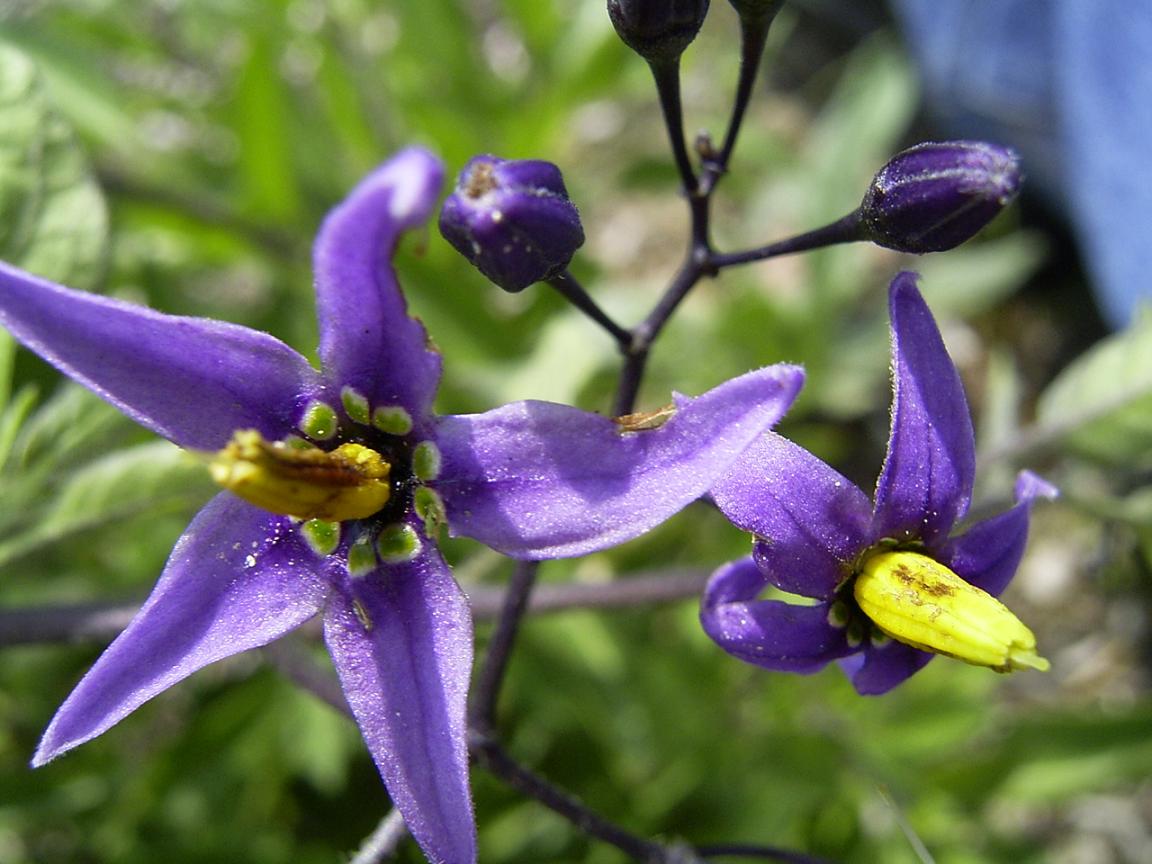
Solanum dulcamara, also known as bittersweet, bittersweet nightshade, bitter nightshade, blue bindweed, Amara Dulcis, climbing nightshade, fellenwort, felonwood, poisonberry, poisonflower, scarlet berry, snakeberry, trailing bittersweet, trailing nightshade, violet bloom, or woody nightshade, is a species of vine in the potato genus Solanum, family Solanaceae. It is native to Europe and Asia, and widely naturalised elsewhere, including North America, where it is an invasive problem weed.

It occurs in a very wide range of habitats, from woodlands to scrubland, hedges and marshes. It is an invasive species in the Great Lakes region and was first spotted in 1843.
Bittersweet is a semi-woody herbaceous perennial vine, which scrambles over other plants, capable of reaching a height of 4 m where suitable support is available, but more often 1–2 meters high. 

The leaves are 4–12 cm long, roughly arrowhead-shaped, and often lobed at the base. The flowers are in loose clusters of 3–20, 1–1.5 cm across, star-shaped, with five purple petals and yellow stamens and style pointing forward. The fruit is an ovoid red berry about 1 cm long, soft and juicy, with the aspect and odor of a tiny tomato, and edible for some birds, which disperse the seeds widely.

It is native to northern Africa, Europe and Asia, spreading throughout the world. The plant is relatively important in the diet of some species of birds such as European thrushes[citation needed] that feed on its fruits and are immune to its poisons, scattering the seeds abroad. It grows in all types of terrain with a preference for wetlands[citation needed] and the understory of riparian forests. Along with other climbers, it creates a dark and impenetrable shelter for varied animals. The plant grows well in dark areas in places where it can receive the light of morning or afternoon. An area receiving bright light for many hours reduces their development. It grows more easily in rich wet soils with plenty of nitrogen.

Solandra maxima

Description
Cup of gold, sometimes called chalice vine, is a heavy, thick stemmed tropical liana with large shiny leaves and large bell shaped golden yellow flowers. The thick and woody ropelike stems branch frequently and root at their nodes, and can run for more than 200 ft (61 m), clinging with aerial rootlets and scrambling over everything in the way. The evergreen leaves are leathery, about 6 in (15.2 cm) long and elliptic, with prominent lighter colored midribs and lateral veins. 

The flowers are truly spectacular, shaped like a chalice, 6-10 in (15.2-25.4 cm) long, flaring open to 4-7 in (10.2-17.8 cm) across. The five lobes of the corolla are reflexed, and each lobe is marked with a narrow purplish brown ridge on the inside. The flowers start out yellow and turn deeper golden as they age. They are fragrant, especially at night, with a scent reminiscent of coconut. Cup of gold blooms intermittently through the year, but mainly in the winter dry season. 

The fruits, rarely seen in cultivation, are round berries, about 2 in (5.1 cm) in diameter.
There are eight species of chalice vines, and they often are confused in the trade. Solandra maxima is the most common species in cultivation and vines offered as S. guttata and S. grandiflora may in fact be this one. The differences are subtle.

Usage

Cup of gold is often grown on large pergolas or trellises, or trained to grow up the side of a house where the spectacular flowers can spill down the walls over windows and doorways. Tolerant of salt spray and salty soils, all the chalice vines are excellent for seaside gardens. This is a large, rampant grower which requires plenty of space and a strong support.

Datura stramonium

Datura stramonium, known by the common names Jimson weed, Devil's snare, or datura, is a plant in the Solanaceae (nightshade) family. It is believed to have originated in the Americas, but is now found around the world. Other common names for D. stramonium include thornapple and moon flower, and it has the Spanish name Toloache. Other names for the plant include hell's bells, devil’s trumpet, devil’s weed, tolguacha, Jamestown weed, stinkweed, locoweed, pricklyburr, and devil’s cucumber.

For centuries, datura has been used as a herbal medicine to relieve asthma symptoms and as an analgesic during surgery or bonesetting. It is also a powerful hallucinogen and deliriant, which is used spiritually for the intense visions it produces. However, the tropane alkaloids responsible for both the medicinal and hallucinogenic properties are fatally toxic in only slightly higher amounts than the medicinal dosage, and careless use often results in hospitalizations and deaths.


D. stramonium is a foul-smelling, erect, annual, freely branching herb that forms a bush up to 2 to 5 ft (60 to 150 cm) tall.The root is long, thick, fibrous and white. The stem is stout, erect, leafy, smooth, and pale yellow-green. The stem forks off repeatedly into branches, and each fork forms a leaf and a single, erect flower.

Datura prefers rich, calcareous soil. Adding nitrogen fertilizer to the soil will increase the concentration of alkaloids present in the plant. Datura can be grown from seed, which is sown with several feet between each plant. Datura is sensitive to frost, so should be sheltered during cold weather. The plant is harvested when the fruits are ripe, but still green. To harvest, the entire plant is cut down, the leaves are stripped from the plant, and everything is left to dry. When the fruits begin to burst open, the seeds are harvested. A single intensively planted acre can produce 1,000 to 1,500 pounds (1,100–1,700 kg/ha) of leaf and 700 pounds (780 kg/ha) of seed.