Salvia officinalis (sage, also called garden sage, or common sage) is a perennial, evergreen subshrub, with woody stems, grayish leaves, and blue to purplish flowers. It is a member of the family Lamiaceae and is native to the Mediterranean region, though it has naturalized in many places throughout the world. It has a long history of medicinal and culinary use, and in modern times as an ornamental garden plant. The common name "sage" is also used for a number of related and unrelated species.
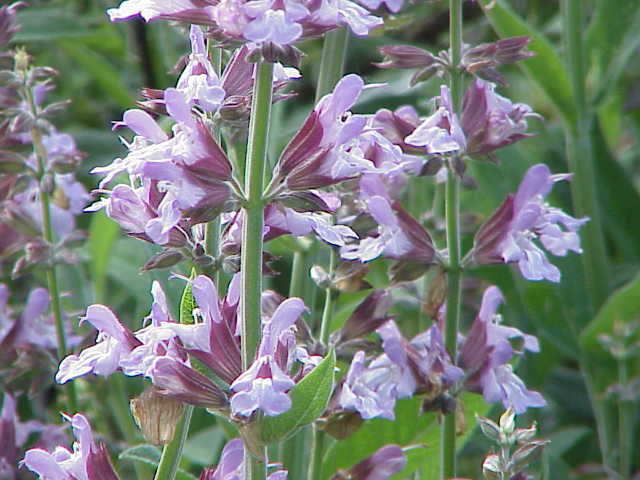 Cultivars are quite variable in size, leaf and flower color, and foliage pattern, with many variegated leaf types. The Old World type grows to approximately 2 ft (0.61 m) tall and wide, with lavender flowers most common, though they can also be white, pink, or purple. The plant flowers in late spring or summer. The leaves are oblong, ranging in size up to 2.5 in (6.4 cm) long by 1 in (2.5 cm) wide. Leaves are grey-green, rugose on the upper side, and nearly white underneath due to the many short soft hairs. Modern cultivars include leaves with purple, rose, cream, and yellow in many variegated combinations.

Winter savory (Satureja montana) is a perennial herb in the family Lamiaceae, native to warm temperate regions of southern Europe and Mediterranean.
It is a perenial plant growing to 16 in (41 cm) tall. The leaves are opposite, oval-lanceolate, 1–2 cm long and 5 mm broad. The flowers are white.
 Easy to grow, it makes an attractive border plant for any culinary herb garden. It requires six hours of sun a day in soil that drains well. S. montana 'Nana' is a dwarf cultivar. In temperate climates it goes dormant in winter, putting out leaves on the bare stems again in the spring – do not cut the plant back, all those stems which appear dead will leaf out again. It is hardy and has a low bunching habit.
Winter savory has been used for hundreds of years.
Easy to grow, it makes an attractive border plant for any culinary herb garden. It requires six hours of sun a day in soil that drains well. S. montana 'Nana' is a dwarf cultivar. In temperate climates it goes dormant in winter, putting out leaves on the bare stems again in the spring – do not cut the plant back, all those stems which appear dead will leaf out again. It is hardy and has a low bunching habit.
Winter savory has been used for hundreds of years.
 Both it and summer savory have been grown and used, virtually side by side. Both have strong spicy flavour. It goes particularly well with any type of mushroom, or in white sauces, and is very good in potato salads. Small amounts spice a regular salad well. It has a rich herbaceous aroma when crushed.
It is used as a companion plant for beans, keeping bean weevils away, and also roses, reducing mildew and aphids.
Both it and summer savory have been grown and used, virtually side by side. Both have strong spicy flavour. It goes particularly well with any type of mushroom, or in white sauces, and is very good in potato salads. Small amounts spice a regular salad well. It has a rich herbaceous aroma when crushed.
It is used as a companion plant for beans, keeping bean weevils away, and also roses, reducing mildew and aphids.
Solanum atropurpureum, commonly known as Malevolence, Purple Devil and the Five-Minute Plant, is a perennial herbaceous plant native to Brazil. S. atropurpureum contains various toxic tropane alkaloids in its fruit, stems and leaves and should not be ingested.
 The plant is a small shrub growing 1.2 to 1.8 meters in height and 90 to 120 cm in width with ovate, spade shaped leaves 5 to 10 cm long when fully grown. It blooms yellow to white flowers in the late spring to mid summer, and produces small (1–2 cm wide) orange fruit. The fruit's juices can be irritating to the touch, so it is recommended that gloves be used when removing or handling. The plant is characterized by its purple stems, which are completely covered by striking purple and green thorns about 2 cm long, from which its common names are ostensibly derived. The plant is short lived with a 3 to 5 year lifespan.
 The plant can be grown ornamentally, requiring full sun and modest water. The plant is known to grow in a wide variety of soils and can resist temperatures as low as -10 degrees Celsius for a few days. Seeds can be harvested from the fruits, and stem cuttings can be used to grow the plant in about 10 to 20 days.
It is also known as a natural reservoir of the potato virus X.
The plant can be grown ornamentally, requiring full sun and modest water. The plant is known to grow in a wide variety of soils and can resist temperatures as low as -10 degrees Celsius for a few days. Seeds can be harvested from the fruits, and stem cuttings can be used to grow the plant in about 10 to 20 days.
It is also known as a natural reservoir of the potato virus X.
Solanum robustum, otherwise known as the Shrubby Nightshade, is a thorny perennial shrub native to northeastern South America of the genus Solanum and is therefore related to the potato and tomato plants.
 A medium shrub, the plant may grow 4 to 8 feet (1.2 - 2.4 m.) with velvety leaves and stems due to dense stellate trichomes present on all faces of the plant. Strong, straight or recurved flattened prickles up to 12 millimeters long may be found along the stems. The leaves grow 6 to 10 inches long and feature nine angled ridges along their perimeter. S. robustum blooms between late spring and mid fall with small clusters of white to yellow-white star shaped inflorescence followed by white or yellowish marble sized berries. S. robustum contains various tropane alkaloids in its leaves, fruit and stems and therefore should not be consumed.

Lycianthes rantonnetii (blue potato bush) is a species of flowering plant in the family Solanaceae. It is native to Brazil, Bolivia, Argentina and Paraguay.Cultivated as ornamental the world over.
 The blue potato bush is one of about 150 species in the genus Lycianthes, which are found mostly in tropical regions of the Americas, and others located in the Asia-Pacific region. Lycianthes is apparently closely related to the chili peppers (Capsicum). However, it was long confused with the nightshades (Solanum), and several little-known Solanum species presumably should be included with Lycianthes.
The species is named for Barthélémy Victor Rantonnet, a 19th-century French horticulturalist.
The blue potato bush is one of about 150 species in the genus Lycianthes, which are found mostly in tropical regions of the Americas, and others located in the Asia-Pacific region. Lycianthes is apparently closely related to the chili peppers (Capsicum). However, it was long confused with the nightshades (Solanum), and several little-known Solanum species presumably should be included with Lycianthes.
The species is named for Barthélémy Victor Rantonnet, a 19th-century French horticulturalist.
Narcissus papyraceus (from papyrus and aceus; meaning paper-like), one of a few species known as "Paperwhite," is a perennial bulbous plant native to the western Mediterranean region, from Greece to Portugal plus Morocco and Algeria. The species is considered naturalized in the Azores, Corsica, Texas, California and Louisiana. The white flowers are borne in bunches and are strongly fragrant. It is frequently grown as a house plant, often forced to flower at Christmas.
Paperwhites are part of the Narcissus genus which includes plants known as daffodils.
 The stems are mid-green and grow upright. Mature height is usually 1–1.5 ft (30–45 cm), though this varies by variety. Several white flowers are borne at the top of each stem and are strongly scented.
Many cultivars are available and are easy to force into bloom indoors. Unlike other Narcissus species, Paperwhites do not require chilling to promote bloom. The bulbs begin to grow as soon as they are planted, with flowers appearing in 3–4 weeks.
Narcissus papyraceus thrives in moist, peat moss based potting mix. Plants can also be grown in containers of water. Cool temperatures between 50–65 °F (10–18 °C) and indirect light will help to prolong the bloom time.
Tree onions, topsetting onions, walking onions, or Egyptian onions, Allium ×proliferum, are similar to common onions (A. cepa), but with a cluster of bulblets where a normal onion would have flowers. Genomic evidence has conclusively shown that they are a hybrid of the common onion and the Welsh onion (A. fistulosum). However, some sources may still treat the tree onion as A. cepa var. proliferum or A. cepa Proliferum Group. Tree onion bulblets will sprout and grow while still on the original stalk, which may bend down under the weight of the new growth and take root some distance from the parent plant, giving rise to the name "walking onion". It has been postulated that the name "Egyptian onion" is derived from tree onions being brought to Europe from the Indian subcontinent by the Romani people.
 The phenomenon of forming bulblets instead of flowers is also seen in garlic and other alliums, which sometimes may also be referred to as top onions or tree onions. The bulblets are usually marble-sized, between 0.5 cm to 3 cm in diameter.
Many tree onions are very strong flavoured, although some cultivars are relatively mild and sweet.The underground bulbs are particularly tough-skinned and pungent, and can be quite elongate, like leeks, or in some types may form bulbs up to 5 cm across. Young plants may be used as scallions in the spring, and the bulblets may be used in cooking similarly to regular onions, or preserved by pickling.
The phenomenon of forming bulblets instead of flowers is also seen in garlic and other alliums, which sometimes may also be referred to as top onions or tree onions. The bulblets are usually marble-sized, between 0.5 cm to 3 cm in diameter.
Many tree onions are very strong flavoured, although some cultivars are relatively mild and sweet.The underground bulbs are particularly tough-skinned and pungent, and can be quite elongate, like leeks, or in some types may form bulbs up to 5 cm across. Young plants may be used as scallions in the spring, and the bulblets may be used in cooking similarly to regular onions, or preserved by pickling.
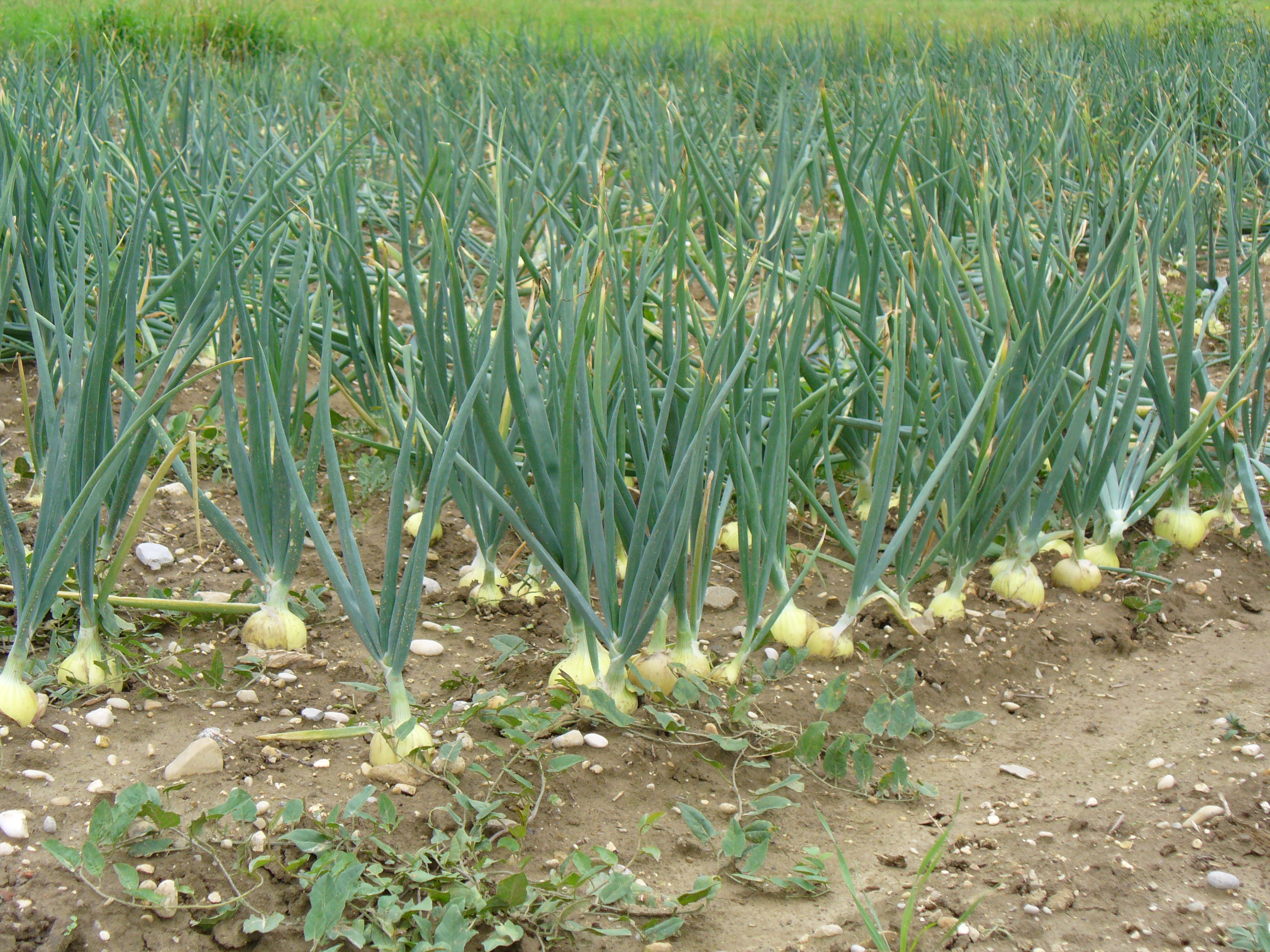
The onion (Allium cepa) (Latin 'cepa' = onion), also known as the bulb onion or common onion, is used as a vegetable and is the most widely cultivated species of the genus Allium. This genus also contains several other species variously referred to as onions and cultivated for food, such as the Japanese bunching onion (A. fistulosum), the Egyptian onion (A. ×proliferum), and the Canada onion (A. canadense). The name "wild onion" is applied to a number of Allium species but A. cepa is exclusively known from cultivation and its ancestral wild original form is not known, although escapes from cultivation have become established in some regions. The onion is most frequently a biennial or a perennial plant, but is usually treated as an annual and harvested in its first growing season.
 Onions are best cultivated in fertile soils that are well-drained. Sandy loams are good as they are low in sulphur, while clayey soils usually have a high sulphur content and produce pungent bulbs. Onions require a high level of nutrients in the soil. Phosphorus is often present in sufficient quantities but may be applied before planting because of its low level of availability in cold soils. Nitrogen and potash can be applied at intervals during the growing season, the last application of nitrogen being at least four weeks before harvesting. Bulbing onions are day-length sensitive; their bulbs begin growing only after the number of daylight hours has surpassed some minimal quantity. Most traditional European onions are what is referred to as "long-day" onions, producing bulbs only after 14+ hours of daylight occurs.
Southern European and North African varieties are often known as "intermediate-day" types, requiring only 12–13 hours of daylight to stimulate bulb formation. Finally, "short-day" onions, which have been developed in more recent times, are planted in mild-winter areas in the fall and form bulbs in the early spring, and require only 11–12 hours of daylight to stimulate bulb formation.Onions are a cool-weather crop and can be grown in USDA zones 3 to 9.Hot temperatures or other stressful conditions cause them to "bolt", meaning that a flower stem begins to grow.
Ipomoea triloba is a species of Ipomoea morning glory known by several common names, including littlebell and Aiea morning glory. It is native to the tropical Americas, but it is widespread in warm areas of the world, where it is an introduced species and often a noxious weed. This is a fast-growing, vining, annual herb producing long, thin stems with ivy-like, petioled, heart-shaped leaves 3 to 6 centimeters long. The leaves sometimes, but not always, have three lobes. The vines produce tubular bell-shaped flowers, each about two centimeters long. They are quite variable in color, in shades of pink, red or lavender, with or without white markings.

'
I. triloba is considered a serious weed in Australia and the Philippines; a principal weed in Cuba, Hawaii, and Honduras; and a common weed in Argentina, Jamaica, and Indonesia (Holm et al., 1979). Like other 'morning-glories', it competes with crop plants for nutrients and water. Due to its twining nature, it also fouls mechanical harvesters. It has been noted as one of three morning-glory weeds of cotton fields in Arizona, USA (G Yatskievych, University of Arizona, personal communication, 1981).
In Java, I. triloba is a weed of brushwoods, living fences, sugarcane fields, roadsides, fields and waste places (van Ooststroom, 1965). A nematode assessment survey of the vegetable-growing areas of Barangay Sicsican in Talavera, Neuva, Ecija, Philippines found that I. triloba and several other weeds serve as alternative hosts for root-knot nematodes (Meloidogyne javanica and M. incognita). Such alternative hosts play an important role in the nematodes' ability to survive and persist during the rice season before the vegetable season (Mamari and Alberto, 1989).
In the Philippines, I. triloba is one of the main weeds of monoculture maize (Pamplona, 1988), one of the most common weeds in intercropped maize, sorghum, sunflowers, coconuts, tomatoes, and sesame (Moody, 1986), and has been listed there as one of 21 common weeds of cotton (Paller and Lijauco, 1981).
In one study, varying densities of I. triloba were maintained in monocultures of soyabeans or maize and maize-soyabean intercrops. Weed density did not normally have a significant effect on insect pest populations, but the presence of I. triloba tended to increase damage by insects in soyabeans and to act as a pest attractant in maize (Mercado et al., 1980).
I. triloba was first reported in Israel in 1986 as a weed in cotton (Joel and Liston, 1986).
Studies in the Solomon Islands showed that I. triloba and two other species are alternative hosts for witches' broom disease of sweet potatoes (Jackson and Zettler, 1983).
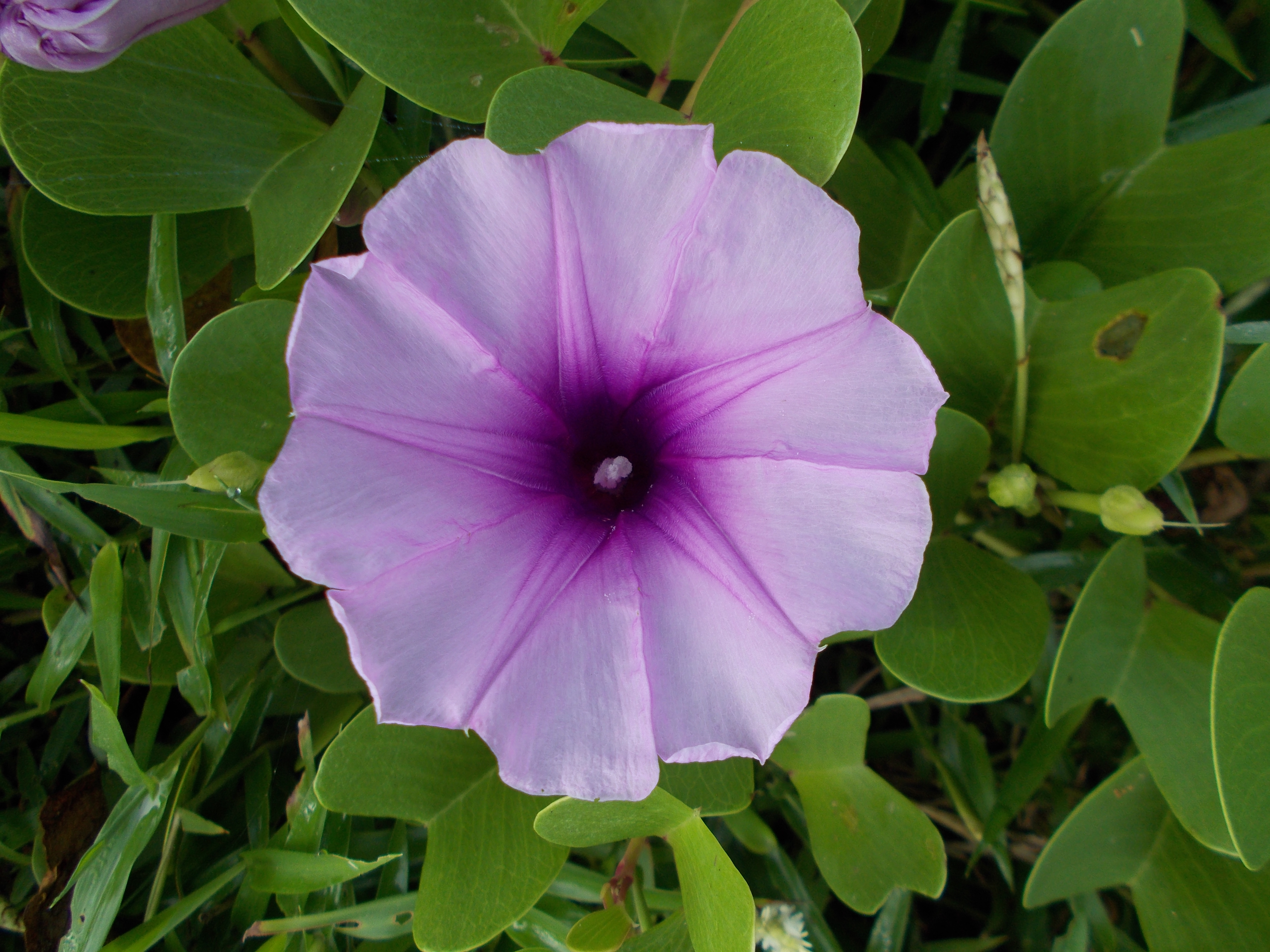
Ipomoea pes-caprae, also known as Beach Morning Glory or Goat's Foot, is a common pantropical creeping vine belonging to the family Convolvulaceae. It grows on the upper parts of beaches and endures salted air. It is one of the most common and most widely distributed salt tolerant plants and provides one of the best known examples of oceanic dispersal. Its seeds float and are unaffected by salt water.
Originally described by Linnaeus, it was placed in its current genus by Robert Brown in 1818.
 This species can be found on the sandy shores of the tropical Atlantic, Pacific, and Indian Oceans. Goat's Foot is common on the sand dunes of Australia's upper north coast of New South Wales and can also be found along the entire Queensland coastline.
Goat's Foot is a primary sand stabilizer being one of the first plants to colonise the dune. It grows on almost all parts of the dune but is usually found on the seaward slopes sending long runners down towards the toe of the dune. The sprawling runners spread out from the woody rootstock but the large two-lobed leaves are sparse and a dense cover on the sand is rarely achieved except in protected situations. This plant grows in association with sand spinifex grass and is a useful sand binder thriving under conditions of sand blast and salt spray.
This species can be found on the sandy shores of the tropical Atlantic, Pacific, and Indian Oceans. Goat's Foot is common on the sand dunes of Australia's upper north coast of New South Wales and can also be found along the entire Queensland coastline.
Goat's Foot is a primary sand stabilizer being one of the first plants to colonise the dune. It grows on almost all parts of the dune but is usually found on the seaward slopes sending long runners down towards the toe of the dune. The sprawling runners spread out from the woody rootstock but the large two-lobed leaves are sparse and a dense cover on the sand is rarely achieved except in protected situations. This plant grows in association with sand spinifex grass and is a useful sand binder thriving under conditions of sand blast and salt spray.
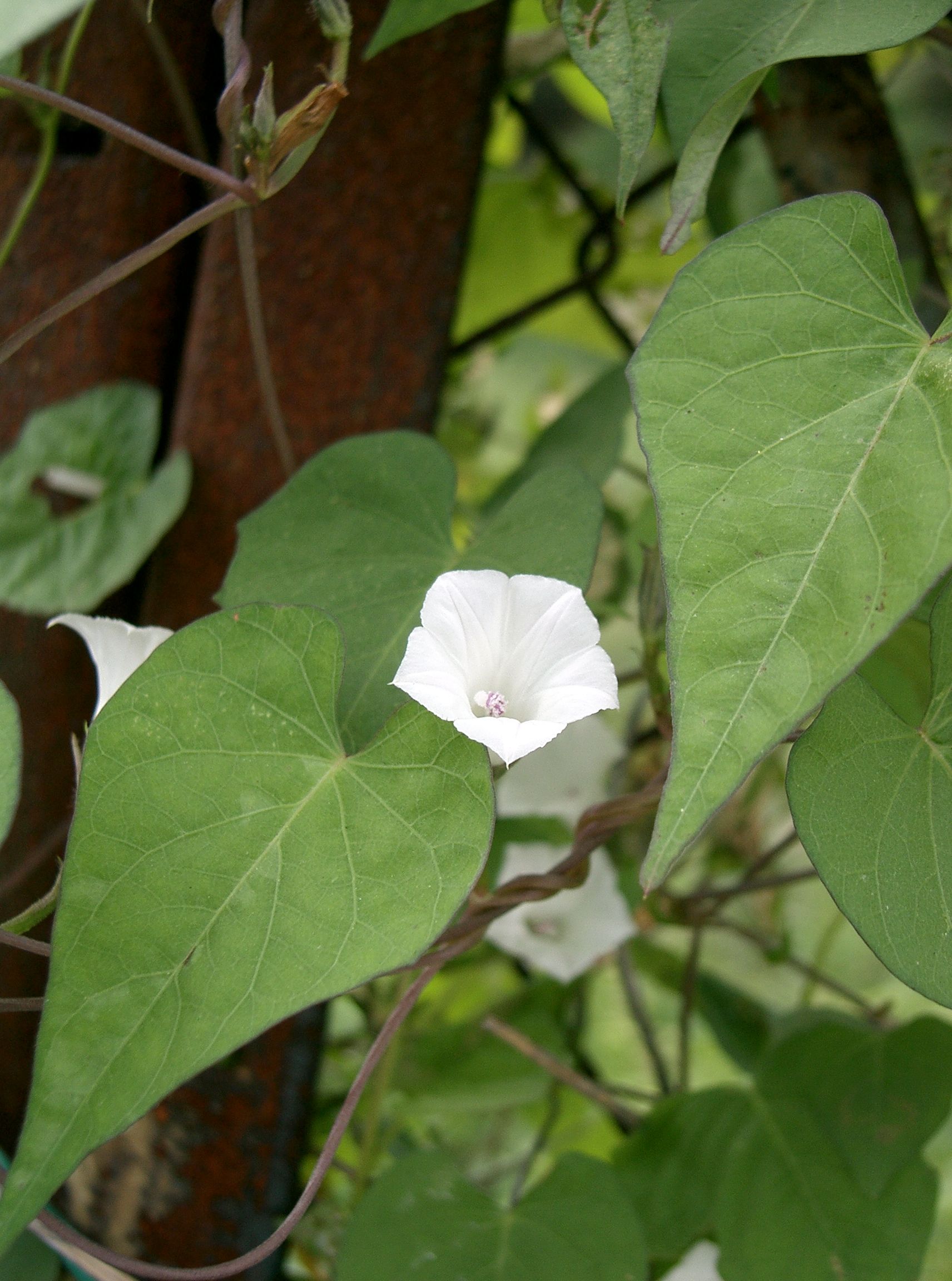
The whitestar potato, Ipomoea lacunosa, is a species that belongs to the Ipomoea genus. In this genus most members are commonly referred to as "morning glories". The name for the genus, Ipomoea, has root in the Greek words ips and homoios, which translates to worm-like. This is a reference to the plant's vine-like growth. Lacunosa comes from a Latin word meaning air spaces, correlating with the veination of the leaves. Ipomoea lacunosa is native to the United States and grows annually. The flowers of this species are usually white and smaller than most other morning glories.
 Since Ipomoea lacunosa is a native species to the United States, the plant can be found in multiple areas throughout the country. Ipomoea lacunosa occurs in almost every state on the east coast, as well as some states in the Midwest, and California. The states that the whitestar potato can be found in are as follows: Alabama, Arkansas, California, Washington D.C., Delaware, Florida, Georgia, Iowa, Illinois, Indiana, Kansas, Kentucky, Louisiana, Massachusetts, Maryland, Montana, Mississippi, North Carolina, New Jersey, New York, Ohio, Oklahoma, Pennsylvania, South Carolina, Tennessee, Texas, Virginia, and West Virginia. This species was also introduced to Canada and lives successfully in the province of Ontario. Although this plant grows rapidly, its tendency to be invasive is rather small in comparison to other members of the genus.
The stalks of the plant that bears flowers is rough and usually has 1-3 flowers. The funnel-shaped flowers of the plant are normally white, but on rare occasion the flowers can be light purple or pink. The five petals are joined (sympetalous) or shallowly lobed and are approximately 2.5 cm long. The sepals are light green, lanceolate, take on a leathery texture and can be up to 11.5 mm long. The anthers are a pinkish-purple and the filaments are white. The ovary is superior, cone-like in shape, and green. There is a single white stigma and style. There are five stamen. The flowers have no perceptible or obvious scent. There are large seed capsules in the flower that are spherical in shape and hairy. The seeds themselves are irregularly oblong, shiny, and brown or black.
Fruit is seen in the form of a capsule that is slightly flattened or rounded in shape, it can be up to 10mm wide.
Trixis californica (American threefold or trixis) is a species of flowering plant in the family Asteraceae. It is native to the southwestern United States in California, Arizona, New Mexico, and Texas, and in Mexico in the states of Baja California, Chihuahua, Coahuila, Durango, Nuevo León, Sinaloa, Sonora, Tamaulipas, and Zacatecas.
Trixis californica is one of 22 species in Trixis, a genus that occurs in North America, Central America, the West Indies, northern Argentina, Uruguay, and southern Brazil.
 Trixis californica is a sprawling shrub or subshrub with flower heads with about 15 bright yellow flowers each. The inflorescence is terminal, usually a panicle or corymb, but sometimes the heads are borne singly at the tips of branches. Leaves are lance-shaped (lanceolate), dark green, 2–11 cm long, and 0.5–3 cm wide. This species occurs from sea level to 5000 feet in elevation. Its habitat types include rocky hillsides, thorn scrub, and desert washes and brush. In the western Sonoran Desert it is exclusive to washes and only grows amongst other plants. In the Colorado Desert it grows in creosote scrub. It grows in scrub in the Yuma Desert, east of the Colorado River. Though it usually flowers between February and October, it may bloom nearly year-round depending on winter weather conditions.
Lobelia laxiflora is a species of flowerin gplant in the bellflower family, Campanulaceae. It is native to the Americas, where it is distributed in South, Central, and North America as far north as Arizona in the United States. It is known by several English-language common names, including Mexican lobelia, Sierra Madre lobelia, Mexican cardinalflower, looseflowers lobelia, and drooping lobelia. In Spanish it is known as aretitos, acaxóchitl, and chilpanxóchitl.
 In general, this is a perennial herb, subshrub, or shrub usually growing up to about 1.5 meters in maximum height, but known to reach 3 meters. The leaves vary in shape, size, and texture. The inflorescence is a raceme up to 40 centimeters long bearing leaflike bracts and several flowers. The flower may be over 6 centimeters long including its tubular base and corolla with narrow, spreading lobes. It is usually red, sometimes yellowish. The anthers protrude from the corolla. The plant produces seeds and also spreads via underground runners.
 Like other lobelias, this species contains medicinally useful alkaloids. Several new compounds have been discovered during chemical analyses of this plant.
Polygala vulgaris, known as the common milkwort, is a herbaceous perennial plant of the genus Polygala belonging to the Polygalaceae family.

The biological form of Polygala vulgaris is hemicryptophyte scapose, as its overwintering buds are situated just below the soil surface and the floral axis is more or less erect with a few leaves.
Polygala vulgaris reaches on average 7–35 centimetres (2.8–13.8 in) in height. The stems have many branches and are woody at the base. It has alternating pointed leaves, almost glabrous, 2 to 4 mm wide and 10 to 20 mm long. Basal leaves are spatulate, with rounded apex, while the upper leaves are lanceolate.
The flowers are gathered in long terminal inflorescences. The color of the corolla varies between blue and violet, it can rarely occurs purple forms. The flower's outer three sepals are normally small, green and insignificant, while the inner two sepals are bigger. The inner sepals are usually shorter than the petals. The stalks of the eight stamens are joined together to form a tube, and united with this tube, one on either side, are two tiny petals. On the lower side of the flower lies the third petal; it too, is joined to the stamen tube, but it is larger, and fringed. The flowering period extends from May through July.
Common Milkwort is quite similar to the Heath Milkwort (Polygala serpyllifolia), but in this species the inner sepals are usually longer than the petals. The Heath Milkwort Polygala serpyllifolia can be all the same colours except for white. These four possible colours account for the milkworts' Irish folk-name of 'four sisters'.
The Great Blue Lobelia (Lobelia siphilitica) is a species within the Campanulaceae family. It is an herbaceous, perennial dicot native to eastern and central Canada and United States. Growing up to three feet tall, it lives in zones 4 to 9 in moist to wet soils. It produces a spike of zygomorphic flowers in the late summer.
It blooms from August to October.
 It is a short lived perennial (with each plant living for only a few years).
Although self-compatible, a flower is unable to offer pollen to itself and it must be pollinated by insects (primarily bees in the Bombus genus).
 Great lobelia is a Missouri native perennial which typically grows in moist to wet locations along streams, sloughs, springs, swamps, meadows and in low wooded areas. A clump-forming perennial which features light to dark blue, tubular, 2-lipped flowers with the three lobes of the lower lip appearing more prominent than the two lobes of the upper lip. Flowers arise from the upper leaf axils forming a dense terminal raceme atop stiff, unbranched, leafy stalks typically rising 2-3' tall. Finely-toothed, lance-shaped, light green leaves (to 5" long). Late summer bloom period. Species name of siphilitica arose from a prior medicinal use of the plant in the treatment of venereal disease. Also sometimes commonly called blue cardinal flower.
Luffa operculata (common name, Sponge Cucumber, Wild Loofa or mướp xơ in Vietnamese) is a species of Luffa. It is cultivated for its fruit, which when fully ripe is strongly fibrous and is used as a fibrous scrubbing sponge for household cleaning. The fruit is a capsule with spikes. The fruit is dark-brown when mature. It is also grown in gardens and yards as an ornamental plant. In colder places they can be grown indoors as a houseplant.
 The species name is derived from the word, operculum, meaning "little lid." When the fruits are mature, and the seeds are ready to be dispersed, a small part of the bottom tip (blossom end) opens up. Then, the seeds fall to the ground.
 This annual climber has an angular stem and can grow to a height of three metres. Its kidney and heart-shaped leaves have three to five lobes and are 10 to 12 cm in length. The stamenless pale yellow flowers, which are to be found on the leaf axils, produce a pointed cylindrical fruit about the size of a plum. On the lengthways ribs, the grey, pumpkin-like fruit is covered in short prickles. The fruit's interior contains pithy tissue, a finely woven fibrous tissue and pale-brown, flat seeds.
Luffa originates from Columbia, Peru, Brazil and Mexico and is cultivated in areas where it occurs naturally.
A.Vogel uses a homeopathic dilution in accordance with the current Homoopathisches Arzneibuch (HAB) (New Official Homoeopathic Pharmacopeia). The dried fruits of Luffa operculata L. are used.
This annual climber has an angular stem and can grow to a height of three metres. Its kidney and heart-shaped leaves have three to five lobes and are 10 to 12 cm in length. The stamenless pale yellow flowers, which are to be found on the leaf axils, produce a pointed cylindrical fruit about the size of a plum. On the lengthways ribs, the grey, pumpkin-like fruit is covered in short prickles. The fruit's interior contains pithy tissue, a finely woven fibrous tissue and pale-brown, flat seeds.
Luffa originates from Columbia, Peru, Brazil and Mexico and is cultivated in areas where it occurs naturally.
A.Vogel uses a homeopathic dilution in accordance with the current Homoopathisches Arzneibuch (HAB) (New Official Homoeopathic Pharmacopeia). The dried fruits of Luffa operculata L. are used.
In its country of origint, the spongy tissue of the dried fruit is used as a medicinal remedy and as a cosmetic sponge
Citrullus colocynthis, with many common names including colocynth, bitter apple, bitter cucumber, desert gourd, egusi, vine of Sodom, or wild gourd, is a desert viny plant native to the Mediterranean Basin and Asia, especially Turkey (especially in regions such as İzmir), Nubia and Trieste. It resembles a common watermelon vine but bears small, hard fruits with a bitter pulp. It originally bore the scientific name Colocynthis citrullus, but is now classified as Citrullus colocynthis. The flowers are yellow and solitary in the axes of leaves and are borne by yellow-greenish peduncles. Each has a subcampanulated five-lobed corolla and a five-parted calyx. They are monoecious therefore the male (stamens) and the female reproductive parts (pistils and ovary) are borne in different flowers on the same plant. The male flowers’ calyx is shorter than the corolla. They have 5 stamens, 4 of which are coupled and 1 is single with monadelphous anther. The female flowers have 3 staminoids and a 3-carpels ovary. The two sexes are distinguishable by observing the globular and hairy inferior ovary of the female flowers.
 Citrullus colocynthis is a perennial plant that can propagate both by generative and vegetative means. However, seed germination is poor due to the extreme xeric conditions, therefore the vegetative propagation is more common and successful in nature. In the Indian arid zone the growth takes place between January and October but the most favorable period for the vegetative growth is during summer, which coincides with the rainy season. The growth declines as soon as the rains and the temperature decrease and almost stops during the cold and dry months of December and January.
Colocynth prefers sandy soils and is a good example of good water management which may be useful also on research to better understand how desert plants react to water stress.
To enhance production, an organic fertilizer can be applied.
Colocynth is also commonly cultivated together with cassava (intercropping) in Nigeria.
Cultivated colocynth suffers of climatic stress and diseases such as cucumber mosaic virus, melon mosaic virus, Fusarium wilt, etc. as any other crop. To improve it, a relatively new protocol for regeneration has been developed with the aim of incorporating disease and stress resistance to increase yield potential and security avoiding interspecific hybridization barriers.
Bidens pilosa is a species of flowering plant in the aster family, Asteraceae. It is native to the Americas but it is known widely as an introduced species of other regions, including Asia and the Pacific Islands. Its many common names include black-jack, beggar-ticks, cobbler's pegs, and Spanish needle.
This plant is considered a weed in some tropical habitats. However, in some parts of the world it is a source of food or medicine. For example, in sub-Saharan Africa, the tender shoots and young leaves are used fresh or dried as a leaf vegetable, particularly in times of scarcity.
 Bidens pilosa is an annual forb of gracile habit, growing up to 1.8 meters tall. It grows aggressively on disturbed land and often becomes weedy. The leaves are oppositely arranged and pinnate in form with three to five dentate, ovate-to-lanceolate leaflets. The petioles are slightly winged.
The plant may flower at any time of the year, but in temperate regions it blooms mainly in summer and autumn. Flowers are borne in small heads on relatively long peduncles. The heads bear about four or five broad white ray florets, surrounding many tubular yellow disc florets.
Bidens pilosa is an annual forb of gracile habit, growing up to 1.8 meters tall. It grows aggressively on disturbed land and often becomes weedy. The leaves are oppositely arranged and pinnate in form with three to five dentate, ovate-to-lanceolate leaflets. The petioles are slightly winged.
The plant may flower at any time of the year, but in temperate regions it blooms mainly in summer and autumn. Flowers are borne in small heads on relatively long peduncles. The heads bear about four or five broad white ray florets, surrounding many tubular yellow disc florets.
 The fruits are slightly curved, stiff, rough black rods, tetragonal in cross section, about 1 cm long, with typically two to three stiff, heavily barbed awns at their distal ends. The infructescences form stellate spherical burrs about one to two centimeters in diameter. The barbed awns catch onto animals or clothing, and can injure flesh. It is an effective means of seed dispersal by zoochory, as the seeds are transported by animals. This mechanism has helped the plant become a cosmopolitan weed in temperate and tropical regions.
Calendula maritima, known as the sea marigold and trailing calendula, is a very rare species from the family of Asteraceae. Some scientists regarded it as Calendula suffruticosa subspecies maritima.
 This halophyte plant is endemic to the western part of Sicily in small coastal habitats, and is a critically endangered species. As of 2012, this plant could still be found in only five small sites in East Sicily. The Province of Trapani has chosen the plant as its official symbol. The sea marigold occurs only on the Sicilian coast: on the island mainland between Marsala and the Monte Cofano; and on the two nearby islets Isola Grande dello Stagnone and Isola la Formica. The most significant population is in a small 10-km2 (3.9-mi2) nature reserve area within the Riserva Naturale Saline di Trapani e Paceco.
It is on the IUCN Red List of critically endangered plant species.
This halophyte plant is endemic to the western part of Sicily in small coastal habitats, and is a critically endangered species. As of 2012, this plant could still be found in only five small sites in East Sicily. The Province of Trapani has chosen the plant as its official symbol. The sea marigold occurs only on the Sicilian coast: on the island mainland between Marsala and the Monte Cofano; and on the two nearby islets Isola Grande dello Stagnone and Isola la Formica. The most significant population is in a small 10-km2 (3.9-mi2) nature reserve area within the Riserva Naturale Saline di Trapani e Paceco.
It is on the IUCN Red List of critically endangered plant species.
This perennial plant reaches a height between 20 and 40 cm (7.9 and 15.7 in). The stems can be easily lignified on the underparts and the leaves are covered with short sticky hairs. The young stems are at first erect, but later they begin to hang and spread on the soil.
In contrast to Calendula officinalis (pot marigold), the leaves are fleshy and have a strong smell. The form of the leaves varies from egg-shaped to linear depending on their placement on the stems.
The basket-shaped blossoms consists of pale to bright yellow single-standing petals, and have a diameter between 3 and 5 cm (1.2 and 2.0 in). The main flowering period is from May to June.
 The C. maritima habitat outside the nature reserve is under serious threat of destruction due to urban development, such as expansion of the Marsala harbour. In addition, other threats and reasons for its rarity include air pollution in the nature reserve from the nearby salt-works and the competition of invasive species, such as the Hottentot fig 'ice plant' (Carbobrotus edulis), in all native locations. The exact number of the remaining native plants is currently unknown.
Calendula officinalis (pot marigold, ruddles, common marigold, garden marigold, English marigold, or Scottish marigold) is a plant in the genus Calendula of the family Asteraceae. It is probably native to southern Europe, though its long history of cultivation makes its precise origin unknown, and it may possibly be of garden origin. It is also widely naturalized further north in Europe (north to southern England) and elsewhere in warm temperate regions of the world.
 Calendula officianalis is a short-lived aromatic herbaceous perennial, growing to 80 cm (31 in) tall, with sparsely branched lax or erect stems. The leaves are oblong-lanceolate, 5–17 cm (2–7 in) long, hairy on both sides, and with margins entire or occasionally waved or weakly toothed. The inflorescences are yellow, comprising a thick capitulum or flowerhead 4–7 cm diameter surrounded by two rows of hairy bracts; in the wild plant they have a single ring of ray florets surrounding the central disc florets. The disc florets are tubular and hermaphrodite, and generally of a more intense orange-yellow colour than the female, tridentate, peripheral ray florets. The flowers may appear all year long where conditions are suitable. The fruit is a thorny curved achene.
 Cultivation
Calendula officinalis is widely cultivated and can be grown easily in sunny locations in most kinds of soils. Although perennial, it is commonly treated as an annual, particularly in colder regions where its winter survival is poor and in hot summer locations where it also does not survive.
Calendulas are considered by many gardening experts as among the easiest and most versatile flowers to grow in a garden, especially because they tolerate most soils.
Cultivation
Calendula officinalis is widely cultivated and can be grown easily in sunny locations in most kinds of soils. Although perennial, it is commonly treated as an annual, particularly in colder regions where its winter survival is poor and in hot summer locations where it also does not survive.
Calendulas are considered by many gardening experts as among the easiest and most versatile flowers to grow in a garden, especially because they tolerate most soils.
 In temperate climates, seeds are sown in spring for blooms that last throughout the summer and well into the fall. In areas of little winter freezing (USDA zones 8-11), seeds are sown in autumn for winter color. Plants will wither in subtropical summer. Seeds will germinate freely in sunny or half-sunny locations, but plants do best if planted in sunny locations with rich, well-drained soil. Pot marigolds typically bloom quickly from seed (in under two months) in bright yellows, golds, and oranges.
